

Luxor is an ancient city located on the east bank of the Nile River in Egypt. It is one of the most visited tourist destinations in the world, and its archaeological sites are a major draw for visitors.
This ultimate guide provides information about visiting this amazing city, including what to see and do, where to stay, where to eat and how to get around.
This post may be sponsored or contain affiliate links, which means I may receive a small commission, at no cost to you, if you make a purchase through a link.
Some interesting facts about Luxor
- The Temple of Luxor is unique because of its location within the city. Unlike many ancient Egyptian temples that are located on the west bank of the Nile, Luxor Temple is situated on the east bank.
- Luxor earned the title of the world’s largest outdoor museum because of its compound’s exotic landmarks that attract millions of tourists.
- Luxor is home to Karnak Temple, which is considered to be the largest religious building or site in the world.
- Luxor is a city in Upper Egypt with an estimated population of 487,896 people as of 2010. It covers an area of 161 square miles or 416 sq km.
- One of the obelisks at the entrance of Luxor Temple was gifted to Paris.


Highlights in Luxor
Karnak Temple
The Karnak Temple is an ancient Egyptian temple complex. It is one of the most visited tourist sites in the world and it is considered to be one of the most impressive ancient monuments on Earth.
The Karnak Temple was built over a period of 2000 years and consists of four main sections: the Precinct of Amun-Ra, the Precinct of Mut, the Ipet-Isut Complex and the Festival Hall of Thutmose III. It was dedicated to Amun-Ra, a powerful god in Ancient Egypt who had many different roles including king and creator god.
The temple complex covers an area of about 200 acres and has more than 30 temples and chapels within its walls. It also contains some remarkable features such as Hypostyle Hall which is made up of 134 columns that are each 23 meters high!
Luxor Temple
Luxor Temple is an ancient temple and was built approximately 1400 BC and is one of the most visited tourist attractions in Egypt. The temple is made up of two parts – an outer court and an inner sanctuary. The outer court contains several statues and reliefs which depict gods, goddesses, and pharaohs. The inner sanctuary includes a hypostyle hall with columns that lead to the main shrine of Amun-Ra, the primary god worshiped at Luxor Temple. It also contains other shrines dedicated to various gods such as Mut, Khonsu, and Ptah. Luxor Temple is a fascinating example of ancient Egyptian architecture and has been designated as a UNESCO World Heritage Site since 1979.
Valley of the Kings and Valley of the Queens
Valley of the Kings is home to over 60 tombs belonging to some of Egypt’s most famous pharaohs, including Tutankhamen and Ramses II. The tombs are decorated with exquisite hieroglyphics and stunning wall paintings that tell stories from ancient times.
Located on the west bank of the Nile River, Valley of the Queens is home to over 70 tombs and burial sites of ancient Egyptian queens, princesses and other members of the royal family. It is also one of the most visited sites in Egypt due to its historical significance and stunning beauty.
Tourists can explore these tombs and learn about the history and culture of Ancient Egypt.
Temple of Queen Hatshepsut
The Temple of Queen Hatshepsut is one of the most iconic monuments in Egypt. Located in Luxor, it was built by the 18th dynasty Pharaoh Hatshepsut and dedicated to the gods Amon-Ra, Ra-Horakhty, and Ptah. It is considered to be one of the most remarkable buildings of its time due to its unique architecture and design.
Medinet Habu
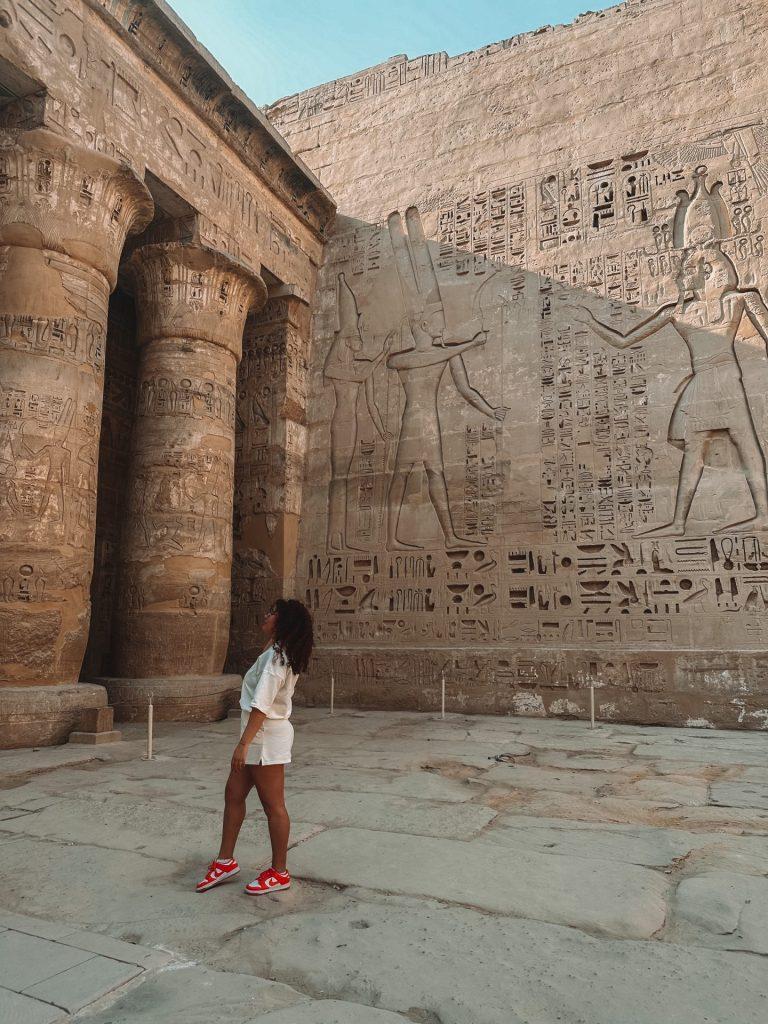
Medinet Habu is an ancient temple complex located on the West Bank of the Nile River. It was built by Pharaoh Ramesses III during the 19th Dynasty and is considered to be one of the most important archaeological sites in Egypt. The site contains a large number of temples, chapels, and other structures that were used for religious ceremonies and rituals. It also contains many inscriptions that provide insight into ancient Egyptian culture and beliefs. The site has been well preserved over time and offers visitors a unique opportunity to explore a piece of history.
Ramesseum
The Ramesseum is an ancient temple complex and was built by Pharaoh Ramesses II (1279-1213 BCE) as a memorial to himself and his father Seti I. The temple complex consists of a main temple, several smaller temples, and a large courtyard surrounded by stone walls. The main temple was dedicated to the gods Amun-Ra and Ptah. It contained two statues of Ramesses II, which are now located in the British Museum in London and the Louvre Museum in Paris. Inside the complex there are also numerous hieroglyphic inscriptions that tell us about Ramesses II’s life and accomplishments.
Colossi of Memnon
The Colossi of Memnon are two massive stone statues. Built during the reign of Amenhotep III, they stand guard at the entrance to his mortuary temple. The statues are believed to represent Amenhotep III himself and depict him seated on a throne with his hands resting on his knees. They are made from sandstone and stand about 18 meters high. The Colossi of Memnon have become an iconic symbol of Luxor and have been featured in films, books, and television shows. They represent a reminder of the grandeur and power of ancient Egypt’s pharaohs.


Practical tips
How much time do you need in Luxor?
One day in Luxor
If you only have one day, I recommend visiting the Temple of Karnak on the east bank of the Nile River and have a sunset felucca ride on the Nile.
Two days in Luxor
If you have two days, I recommend on a sunrise hot air balloon ride, visiting the Valley of the Kings, exploring the Temple of Hatshepsut, and stopping by the Colossi of Memnon on the first day. On the second day, I recommend visiting Luxor Temple, Luxor Museum, and the Mummification Museum.
Three days in Luxor
If you have three days, I recommend starting on the West Bank with temple hopping, including visits to the Theban Necropolis excavation projects. On the second day you should visit the Luxor Temple, Luxor Museum, and the Mummification Museum. On the third day you can finish your trip with visiting the Valley of the Kings, the Valley of the Queens, and the Tomb of Ramses III.


How to get to Luxor?
To get to Luxor, you can take a flight from Cairo or other cities in Egypt. Alternatively, you can take a bus from Cairo or other cities in Egypt. If you are traveling from outside of Egypt, you can also take a ferry from Aqaba or Hurghada. Once you arrive at your destination, there are plenty of taxis available to take you around the city and its attractions.
Getting around Luxor
Luxor is a city of ancient wonders, exploring it can be an overwhelming experience.
Guide
Having a guide to help you navigate the city’s attractions can make your trip much more enjoyable. With a knowledgeable guide, you can discover the secrets of Luxor and its many hidden gems. From temples to tombs and monuments, your guide will provide insight into the history and culture of this remarkable city.
Driver
If you are looking to explore the city, getting around with a driver is the best way to do so. With a driver, you can easily get from one location to another without any hassle. The drivers are experienced and knowledgeable about the city’s attractions, making it easy for you to find your way around. They can also provide valuable insights into the culture and history of Luxor, giving you an unforgettable experience.
Taxi
Taxis offer an affordable and convenient way to explore the city. With the help of a taxi, you can easily reach all the major attractions without having to worry about getting lost or running out of time.
Taxis are easy to find and book, making it possible for travelers to explore all that this beautiful city has to offer. Taxis are also more reliable than other forms of transportation such as buses or trains, allowing you to get around quickly and safely.

The Luxor Pass
To make the most out of your visit, you may consider purchasing the Luxor pass. The Luxor pass is a great way to save money while exploring the ancient city. It offers a wide range of activities, from sightseeing to museum visits.
There are two Luxor passes, the standard Luxor Pass and the Premium Luxor Pass.
The Standard Luxor Pass
The Standard Luxor Pass is a ticket that grants you access to multiple attractions in Luxor. Unlike the premium pass, it does not include entry to all the major attractions but offers a selection of popular sites. The pass is valid for five days and includes entry to the following attractions:
- The Karnak Temple Complex
- The Luxor Temple
- The Luxor Museum
- The Mummification Museum
- The Tombs of the Nobles
- The Tomb of Ramesses VI
The Premium Luxor Pass
The Premium Luxor Pass grants you access to all the major attractions in Luxor. This pass is also valid for five days and includes entry to sites, such as:
- The Valley of the Kings
- The Temple of Queen Hatshepsut
- The Karnak Temple Complex
- The Luxor Temple
- The Luxor Museum
- The Mummification Museum
- The Tombs of the Nobles
- The Tomb of Ramesses VI


What are the benefits of the passes?
The passes offer several benefits, including:
Cost-effective
The pass is designed to save you money. If you were to purchase individual tickets to all the attractions included in the pass, it would cost you more than the price of the pass.
Time-saving
The pass allows you to bypass the long queues that are common in many of the popular attractions. This means that you can spend more time exploring and less time waiting in line.
Flexibility
The pass is valid for five days, allowing you to visit the attractions at your own pace. You can choose which attractions to visit and when, depending on your interests and schedule.
Convenience
The pass eliminates the need to carry cash and purchase individual tickets at each attraction. You only need to show your pass at the entrance, and you’re good to go.
How much are the passes?
The Standard Luxor Pass costs 4000 Egyptian pounds (approximately 130 USD). Students pay 70 USD.
The Premium Luxor Pass costs 7700 Egyptian pounds (approximately 250 USD). Students pay 130 USD.
This may seem like a lot of money, but considering the number of attractions it includes and the money you save, it’s a good deal.
Where can you buy the passes?
You can purchase the Premium Luxor Pass at the ticket office at Karnak Temple and the ticket office at the King’s Valley Visitor Centre. It’s also possible to buy the tickets in advance at the Department of Cultural Relations at the Ministry of Tourism & Antiquities of Egypt headquarters on 3 Al-Adel Abubakr Street, Zamalek.
You will need to provide your name, nationality, a copy of the main page of your passport and a passport sized photo. Payment with credit card is also possible. Students need to present a valid student card, Preferably an international student identity card.
If you’re planning a trip and want to visit multiple attractions, the Premium Luxor Pass is an excellent investment. It saves you time and money, offers flexibility, and eliminates the need to carry cash or purchase individual tickets. With the pass, you can explore the ancient wonders of Luxor at your own pace and make the most out of your visit.

Where to eat?
I only had two days and one night in Luxor, so I only went to one of the most popular restaurants, Sofra Restaurant & Café. Sofra is located within walking distance of the Temple of Luxor.
Other highly recommend restaurants in Luxor are:
Where to stay?
The best areas to stay in are mainly located on the East Bank of the Nile, particularly around the Temple of Luxor, which is the center of the city’s activity. The West Bank of the Nile also offers some great options for accommodation.
With good research you can find some nices places to stay. Here are a couple of places that are highly rated:
- Sofitel Winter Palace – Best for Nile views.
- Djorff Palace – Beautiful rooms with a garden view
- Hilton Luxor Resort & Spa – Luxury hotel on the East Bank of the Nile.
- Sonesta St. George Hotel Luxor – 5-star hotel located in the heart of Luxor.
- Pavillon Winter Luxor – Located close to the Luxor Temple with a beautiful garden and pool.
When you are on a budget I recommend staying here:
- Nile Sunrise Flats – Beautiful mountain views
- Nefertiti Hotel Luxor – Overlooking the Luxor Temple
- Nile Panorama Hotel – Best for Nile views
In conclusion, Luxor is a fascinating city in Egypt that is rich in history and culture. Visitors can explore ancient temples, tombs, and monuments, such as the Temple of Karnak, the Valley of the Kings, and the Luxor Temple. Accommodation options are plentiful, with many hotels located on the East Bank of the Nile offering stunning views of the river.
Whether you have one day or several days to explore Luxor, there are plenty of sites and experiences to make your trip unforgettable.
If you want to visit Cairo in Egypt, don’t forget to ready my other blog about the 7 best things to do in Cairo.
No Comments